
Following diagram illustrates the process of change management as implemented by SapphireIMS. The Change Advisory Board (CAB) and Emergency Committee (EC) plays an important part in the change management process.
Change Manager: the person responsible for the change process and as such, he/she is the person ultimately responsible for all the tasks assigned to Change Management. In large organizations the Change Manager may have a team of specific advisors for each of the various areas.
Change Advisory Board (CAB): this is an internal body, chaired by the Change Manager. It mainly comprises of the representatives of the main IT services management areas. However, in some cases it may also include:
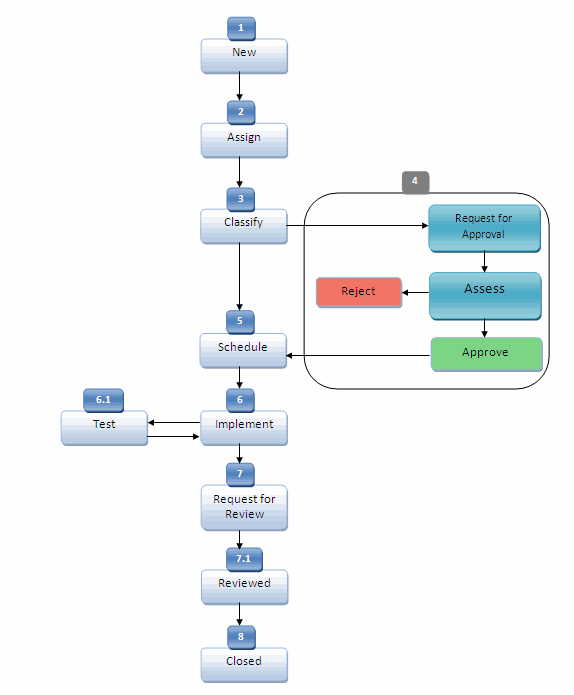
Refer to the above flow chart
|
States |
Description |
|
New |
A change requester will request for the change by raising an RFC |
|
Assign |
The RFC will be assigned to a Change Manager |
|
Classify |
The Change Manager classifies the RFC by assessing its urgency and impact and assigning an appropriate priority and category. If it is a standard change, it is scheduled and implemented directly |
|
Change Approval |
All RFCs will go through Change Approval process and the CAB committee will approve the RFC by assessing the severity and impact. The ‘Emergency Committee’ approves major changes |
|
Schedule |
The Change Manager will schedule the change by specifying the estimate time for implementation |
|
Implement and Test |
The Change Builder implements the changes tested by an Independent Tester |
|
Request for Review and Reviewed |
Before closing the change it is necessary to carry out an evaluation. This will allow the real impact of the change on the organization’s quality of service and productivity to be assessed. The Change Manager reviews and ensures that the change is implemented as per RFC and the back out plan is tested |
|
Close |
If the final evaluation finds the process and results to have been satisfactory, the RFC will be closed |